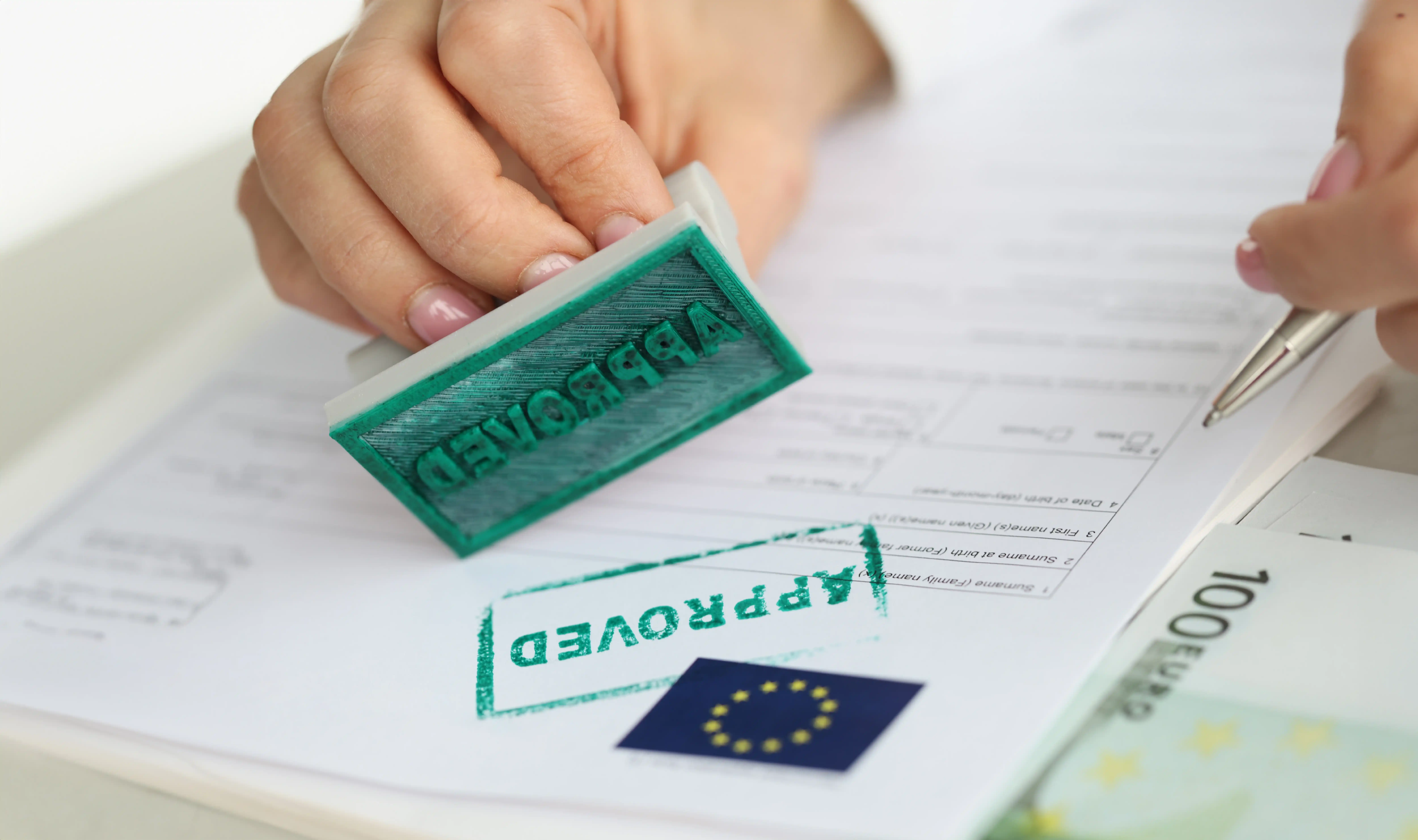
If you plan to live in Spain for more than three months, you must apply for the EU certificate of residence in Spain. This certificate proves that you legally reside in the country and gives you access to essential services such as healthcare, employment, and education. It’s a small piece of paper, but without it, you cannot build a legal life in Spain.
Who needs to apply for the EU residence certificate?
The certificate is mandatory for EU, EEA, and Swiss citizens who stay longer than 90 days. It applies whether you come for work, study, retirement, or family reasons. If you don’t register, you may face serious limitations. You won’t be able to register at your local town hall, access the healthcare system, or sign a work contract legally.
Even temporary residence without registration has limits. Authorities can request proof of your legal status, and without this certificate, you’ll have nothing to show. Registering is not optional—it’s the legal base for your stay in Spain.
What does the EU certificate of residence look like?
The EU certificate of residence in Spain is a green paper document, often referred to informally as the “green NIE”. Despite its nickname, it is not a plastic card, nor does it function as a national identity document. It is a proof of legal residence—nothing more, but also nothing less.
The certificate includes key personal details: your full name, nationality, NIE number, registered address, and date of registration. These elements confirm that you have fulfilled the legal requirements to reside in Spain as an EU, EEA, or Swiss national. You must present it alongside a valid passport or national identity card when required by authorities or service providers.
Unlike residence cards issued to non-EU citizens (TIE), this certificate is simpler in format but equally powerful in legal terms. It grants you the same rights to live, work, and access public services.
The document does not expire, but it is only valid as long as your circumstances remain consistent. If you move to a new province, change your employment status, or shift from student to worker, for instance, you must inform the relevant immigration office. Keeping your registration up to date ensures that your legal status remains protected and that you avoid problems when renewing permits or requesting other certificates in the future.
Required documents for the application
You must present a complete application at your local immigration police station. The paperwork varies depending on your situation. If you don’t submit the correct documents, your application may be rejected on the spot.
Main documents for all applicants:
- Valid passport or national ID card (original + copy)
- Filled-out EX-18 form (in duplicate)
- Proof of appointment
- Proof of payment of the government fee (Modelo 790, code 012)
- Evidence of your purpose for residing (employment, study, sufficient means, etc.)
- Health insurance policy covering you in Spain
Specific documentation by profile
| Applicant type | Additional documents required |
|---|---|
| Employed | Employment contract or job offer + Social Security registration |
| Self-employed | Tax registration + proof of business + Social Security enrollment |
| Students | Enrollment letter + private or EU health insurance + funds letter |
| Retired or economically independent | Bank statements or proof of income + full health insurance |
If your documents are in a foreign language, you must provide a sworn Spanish translation. In some cases, legalisation or apostille may also be required, depending on the country of origin.
Financial requirements: how much is enough?
The law requires applicants to prove they will not become a burden on the Spanish welfare system. There is no fixed income rule, but most authorities use a minimum threshold as a reference.
Indicative financial requirements
| Household size | Minimum yearly income/savings required |
|---|---|
| Single applicant | €7,200 per year or €36,000 in savings |
| Couple | €12,240 per year or equivalent in savings |
| Family of four | €22,320 per year (main applicant + dependents) |
These values are based on Spain’s public income index (IPREM) and may vary slightly by region. Some offices accept property ownership as a complementary guarantee, but this isn’t always the case.
If you present insufficient financial proof, your application may be refused or delayed. Submitting a clear, structured economic file improves your chances dramatically.
Where and how to apply
You must apply in person at the designated immigration police station in your province. The process begins by securing an appointment online through the official portal. Slots can be scarce, especially in large cities, so book early.
Steps to follow:
- Complete and sign the EX-18 form
- Pay the fee using the Modelo 790 code 012 and bring the stamped receipt
- Gather all documents in order and make photocopies
- Attend your appointment with originals and copies
- If everything is in order, you’ll receive your certificate the same day
Keep in mind: if your documentation lacks translation, legalisation, or fails to meet local standards, your process may be suspended.
Frequently asked questions about EU certificate of residence in Spain
Can I lose my EU certificate of residence in Spain if I leave the country?
Yes, prolonged absence from Spain can affect your legal status. While the EU certificate of residence in Spain does not have an expiry date, your right to reside depends on maintaining ties to the country. If you leave Spain for more than six consecutive months in a year—without valid justification such as pregnancy, serious illness, or study—you may lose the right to reside. Returning to Spain after such an absence might require starting the application process again. For those with permanent status, the period extends to 12 months, but similar caution applies.
Do I need to renew the EU certificate of residence in Spain?
No renewal is required as long as you remain in Spain and meet the original conditions under which the certificate was issued. However, if your circumstances change significantly—such as switching from student to employed, or changing your address—you may need to update the certificate. This ensures your legal status aligns with your actual situation. Also, if you lose the physical document or it becomes damaged, you must request a duplicate. Keeping your personal data current helps avoid complications when accessing public services.
Can non-EU family members be included in the application?
Non-EU family members cannot be included in the same application but can benefit from the resident status of the EU citizen. Once the main applicant has obtained the EU certificate of residence in Spain, their non-EU relatives can apply for their own residence card as a family member of an EU citizen. This separate procedure has its own requirements, including proof of the family relationship, dependency, and health insurance. Although it’s a different legal track, it depends entirely on the validity of the EU citizen’s residence status.
What happens if I lose the certificate?
If you lose the EU certificate of residence in Spain, you must request a replacement as soon as possible. The process is similar to the original application but usually requires fewer documents. You’ll still need to book an appointment, bring identification, and pay the corresponding fee. If your address has changed since the last issuance, you must also provide updated proof of residence. A replacement does not reset your legal residency timeline—it simply restores the physical proof of your existing status.
What law governs the EU certificate of residence in Spain and who issues it?
The EU certificate of residence in Spain is regulated under Royal Decree 240/2007, which incorporates EU Directive 2004/38/EC into Spanish law. This decree establishes the right of free movement and residence for EU citizens and their families. The issuing authority is the National Police, specifically through its immigration units (Oficinas de Extranjería). Although the law applies uniformly across Spain, the interpretation and specific document requirements may vary slightly between provinces. Knowing how your local office applies the law is key to a smooth application.
Start your Spanish residency with legal clarity
The EU certificate of residence in Spain may seem simple, but many applications are delayed by minor mistakes. A missing bank statement, an outdated insurance policy, or an incomplete form can stop your process cold.
If you want to avoid setbacks, bring structure to your case from the beginning. Organise your documents, verify translations, and understand what each province requires. Not all immigration offices interpret the same rulebook the same way.
Immigration Lawyer Barcelona helps EU citizens turn confusing bureaucracy into a clear, step-by-step process. Their team knows how to prepare a compliant file, address legal gray areas, and respond if the police request extra documents or clarification. That kind of insight can save you weeks—or even months.
This certificate is more than a formality. It unlocks access to legal employment, healthcare, housing, and education in Spain. Don’t leave it to guesswork. Let a professional guide your first steps and ensure your residency starts on the right foot.